Thursday, April 27, 2017

Humanitarian Missile Attack? Responsibility to Protect (Redux)


By Harold Young, Ph.D.


“There’s not any sort of option where a political solution is going to happen with Assad at the head of the regime…. regime change is something that we think is going to happen because all of the parties are going to see that Assad is not the leader that needs to be taking place for Syria”
-      U.S. Ambassador to the United Nations, Nikki Haley (April 9, 2017)

As the ongoing and complicated intrastate war in Syria festers in the shadow of the tragedies in Cambodia, Rwanda, Somalia and Kosovo and the smoldering conflicts in South Sudan, Burundi and Ukraine (to name only a few), the latest action by the Trump Administration is worthy of examination. Ongoing calls for direct intervention to stop flagrant human rights violations have not yielded real results. It begs the questions of the responsibilities of the state for the welfare of its citizens and what responsibilities other states have to those impacted by intrastate wars.

The answers may indicate a reappraisal of the concept of sovereignty and internationalize the protection of human rights. Humanitarian intervention can be defined as the threat or use of force by a state, group of states, or international organization to protect people in the target state (Murphy). The debate around the issue of protecting of human rights juxtaposes interventions in support of universal human rights against the premium of national sovereignty (Booth). Third-party state(s) intervention can be examined through the prism of two questions. First, what is the status of “sovereignty” if a government exercises authority or acquiesces to actions detrimental to the citizens? Second, can a new paradigm of legitimatized humanitarian interventions be reconciled with the asymmetry of power between states?

The state is a pillar of the international community where the sovereign state is the primary and most powerful actor in international relations (Mearsheimer). Others argue, however, that the state has lost some of its potency as a political variable and have elevated the role of non-state actors Keck & Sikkink. Further, the authority of the state “is, increasingly, being either shared with, sustained by, or constrained by these proliferating authorities” (Strange). It persuasiveness of either position is debatable. Following the Bush administration’s [mis]adventures in Iraq and Afghanistan, the Obama administration’s reticence about direct involvement in regime change and nation building was understandable. Some suggest those were lessons too-well-learned leading to an overly hands-off policy. In the case of Syria, the Assad regime remains the de facto and de jure government of Syria with all the rights and responsibilities represented in part by its seat at the U.N. Recent developments under the Trump administration is a pivot in this crisis. The firing of 59 missiles at a Syrian airbase by the U.S. Navy on April 7, 2017 should cause pause about the role of powerful states in the international community. The position of the Trump Administration is further complicated by the seemingly contradictory statements on Syria by U.S. Secretary of State Rex Tillerson. He stated that the attack was a one-off event in response to the chemical attack on civilians by Syria’s Assad regime on April 5, 2017 and that the removal of President Assad is not the number one priority for the U.S. On the other hand, the U.S. Ambassador to the U.N., Nikki Haley, said that peace is not possible in Syria while President Assad remains in power (Schulberg).

An examination of the U.S. policy developing out of the Kosovo intervention in 1999 may clarify the state’s criteria for supporting humanitarian intervention. Following President Clinton’s March 24, 1999 speech on U.S. involvement, then-National Security Advisor, Sandy Berger, offered three criteria underpinning the policy: (a) there must be genocide or ethnic cleansing; (b) the U.S. must have the capacity to act; and (c) a U.S. national interest must be at stake (Brown). It should be noted, however, that the commitment to act does not reflect any international commitment but primarily reflects U.S. interests. Using this as a benchmark, does the decision to Syrian attack satisfy these criteria? Clearly, there is genocide and the U.S. has the capacity to act. Establishing the validity of the third criteria is a bit more nebulous. Is the disaster in Syria a threat to U.S. national security? The debates continue on this issue.

This dynamic of intervention policy and use of force for humanitarian interventions, concerns some states. Smaller and weaker states are concerned that this trend makes them possible targets of “humanitarian intervention” by stronger states. A Reuters report on the North Korean response is exemplary of this concern. The unnamed North Korean spokesperson is reported as saying that the Syrian attack supported and justified its drive for nuclear weapons as a shield to any possible intervention. As a U.S. aircraft carrier strike group heads to the Korean Peninsula, Secretary Tillerson states that the North Korean nuclear missile program is dangerous and something must be taken to stop it. While the U.S. appeals to China to do more to rein in North Korea, the U.S. President tweets that the U.S. will deal with the Korean problem even without China’s help. Meanwhile, the North Koreans state they will respond to what it calls reckless aggressive actions by U.S. (Reuters). Further, Russia and Iraq who are allies of the Assad regime characterize the U.S. missile attack as aggression which crosses “red lines” (Reuters). Cynics may wonder if that is the same “red lines” President Assad crosses when he bombs and gases civilians. Finally,

Despite discussions about prevention and enforcement of international law (Wang; Damrosch), the focus continues to be on armed interventions (“jus ad bellum” or right to war) and the nexus between protection and international criminal tribunals (“jus post bellum” or justice after war). The 2011 removal of President Gadhafi and the ensuing chaos in Libya is a good case study for the disadvantage of not having an international agreement on guidelines and frameworks for interventions (Thakur). It is unclear, however, how far the Trump administration is willing to go in Syria, North Korea or anywhere else based on the current mixed signals about its guiding policy or plan of action.

Meanwhile, wars smolder and rage in the hotspots around the world precipitating death, destruction of vital infrastructure, internal populations displacement, refugee crises, and economic pressure on neighboring states. Without clear international leadership, a seemingly paralyzed global community struggles with sporadic attempts at cease fires, limited humanitarian aid and now a 59 missile attack on a single target is characterized as a response to genocide.

About the Author: Harold Young is an Assistant Professor at Austin Peay State University in Clarksville, Tennessee. His research area is Public Law and examines an American and comparative perspective on judicial institutional changes and decision making. Previously, he was a health communications project manager, a social worker and an attorney-at-law. He can be reached via email at youngh@apsu.edu.


Monday, February 13, 2017

Incoming Fire from All Directions: Microaggressions Faced by Students and Faculty of Color

by Harold Young
Multi-directional pressures and demands from administrations, departments, students, and parents are universal in academic life. What is different for faculty of color is the racist micro-aggressions encountered while going about the tasks of engaging a diverse student body and fulfilling other responsibilities in a challenging social and political environment. We are charged with supporting our students who also share these experiences.
In Blackballed: The Black and White Politics of Race on America’s Campuses (St. Martin’s Press, 2016), Lawrence Ross points out that it never seems to matter when or how often we bear witness to these realities, the incidents are marginalized as being isolated, or the acts of “one bad apple”.
My goal here is to share some divergent experiences to reinforce to others that we, as faculty of color, are neither alone nor insane, or even overly-sensitive. Here are a few examples of what I have personally encountered:
* During a faculty orientation, the facilitator suggested the primary way of recognizing when a student was experiencing high anxiety or having a panic attack in class was a change in complexion. This is a “curious” indicator considering that approximately 20 percent of our students identify as Black or African American. The facilitator seemed completely oblivious to the inappropriateness of that indicator for those who would have no apparent physical change in complexion.
* Following a controversial police shooting of unarmed Black men last year, I participated in two public forums which included law enforcement. A police chief opened his remarks by referring to Ferguson, Missouri, as the start of the problem between law enforcement and the Black community. When I pointed out that it is a 400-year-old problem, he immediately apologized and backtracked – standard responses when caught marginalizing and isolating the issue. Many attendees were obviously traumatized by the recent events and expressed fear of any possible encounter with law enforcement.
* In another forum, a White colleague expressed his complete understanding of racial discrimination because he has had a ponytail since the 1960s and 1970s and often felt rejected by some people. It never seemed to occur to him that while he could choose to cut his hair, skin color is not a choice.
* I witnessed a Black female student recounting her anxiety about being judged for her hair style choice: (a) If she went “natural” it may be interpreted as making a radical statement by the mainstream community; (b) a hair wrap might be critiqued as being “Aunt Jemima” and (c) wigs and other forms of “fake” hair might be interpreted as an identity crisis or trying to fit in. Her words to her classmate were literally, “you just don’t understand what Black women go through!”
* Finally, I attended a social gathering at a recent political science conference. Not recognizing anyone, I introduced myself to two colleagues and took a sip of wine. Seconds later a gentleman asked to join the table, introduced himself to my colleagues, then on looked directly into my face and turned his head without introducing himself. Make what you will of that!
As faculty of color, we must manage ourselves, encourage our students, and promote learning in sometimes less than ideal social climates. These tasks are often complicated by the denial or minimizing of the problems faced by segments of university communities and the society as a whole. We have to carefully choose when, where and how to respond to incoming fire lest we be labelled thin-skinned and aggressive. There are no simple answers, but know that you are not in this alone. As positive outcomes are dependent on multiple veto players, it is incumbent upon our personal leadership and the leadership of our colleagues, regardless of racial identity, to acknowledge these societal problems and constructively engage to develop strategic approaches to support one another. We then must follow through, and repeat!
Harold Young is an assistant professor at Austin Peay State University in Clarksville, Tennessee. His research area is Public Law and he examines an American and comparative perspective on judicial institutional changes and decision making. Earlier, he was a social worker, a health communications project manager, and an attorney-at-law. He can be reached via email at youngh@apsu.edu.


https://www.jbhe.com/

Wednesday, February 1, 2017

Race and “Ism”: Incoming Fire from All Directions

Since it is impossible to discuss the issue of racism from the beginning, I will just start where I find myself. As an Assistant professor, it is probably safe for me to say that the multi-directional pressures and demands from administrations, departments, students, and parents are universal in academic life. What is different for faculty of color is the racism in the form of micro-aggressions encountered while going about the tasks of engaging a diverse student body and fulfilling other responsibilities in a challenging social and political environment. We are charged with supporting our students who also share these experiences. In “Blackballed: The Black and White Politics of Race on America’s Campuses, Ross (2015)”, Lawrence Ross points out that it never seems to matter when or how often we bear witness to these realities, the incidents are marginalized as being isolated, or the acts of “one bad apple”.
My goal here is to share some divergent experiences to reinforce to others that we, as faculty of color, are neither alone nor insane, or even overly-sensitive. Here are a few examples of what I have personally encountered:
1.    During a faculty orientation, the facilitator suggested the primary way of recognizing when a student was experiencing high anxiety or having a panic attack in class was a change in complexion. This is a “curious” indicator considering that approximately 20% of our students identify as Black or African American. Even considering the diversity within that group, the facilitator seemed completely oblivious to the inappropriateness of that indicator for those identifying as Black or African American where there would be no apparent physical change in complexion.
2.    I witnessed a Black female student recounting her anxiety about being judged about how she styled her hair: (a) If she went “natural” it may be interpreted as making a radical statement by the mainstream community; (b) a hair wrap might be critiqued as being “Aunt Jemima” and (c) wigs and other forms of “fake” hair might be interpreted as an identity crisis or trying to fit in. Her words to her classmate were literally, “you just don’t understand what Black women go through!”
3.    Following a controversial police shooting of unarmed Black men last year, I participated in two public forums in Fall 2016 which included law enforcement. A police chief opened his remarks by referring to Ferguson as the start of the problem between law enforcement and the black community. When the point was raised that it is a 400-year-old problem, he immediately apologized and backtracked – standard responses when caught marginalizing and isolating the issue. Many attendees were obviously traumatized by the recent events (I say this not because of any complexion variation that may or may not occurred) and expressed fear of any possible encounter with law enforcement.
4.    From the discussion in the forum mentioned above, the law enforcement representatives seem to have little understanding of the differences between community relations and community engagement. While the police chief was touting police-youth programs (public relations), I personally witnessed three White officers harassing three young Black men over a vehicle moving violation. The situation escalated to the point where one of the young men was pulled out of the car where he crouched as the officers searched the vehicle (and found nothing) while shouting at all three. Despite their “public relations” activities, this is an example how law enforcement engages the community.
5.    In another forum, a White colleague expressed his complete understanding of racial discrimination because he has had a ponytail since the 1960s and 1970s and often felt rejected by some of his counterparts. It never seemed to occur to him that while he could choose to cut his hair, skin color is not a choice.
6.    Finally, I attended a social gathering at a recent political science conference. Not recognizing anyone, I introduced myself to two colleagues and took a sip of wine. Seconds later a gentleman asked to join the table, introduced himself to my colleagues, then on looked directly into my face and turned his head without introducing himself. Make what you will of that!
As faculty of color, we must manage ourselves, encourage our students, and promote learning in sometimes less than ideal social climates. This task is often complicated by the denial or minimizing of the problems by segments of university communities and the society as a whole. We have to carefully choose when, where and how to respond to incoming fire lest we be labelled thin-skinned and aggressive. There are no simple answers, but know that you are not in this alone. As positive outcomes are dependent on multiple veto players, it is incumbent upon our personal leadership and the leadership of our colleagues, regardless of racial identity, to acknowledge these societal problems and constructively engage with one another to develop strategic approaches to support one another. We then must follow through, and repeat!

About the author: Harold Young is an Assistant Professor at Austin Peay State University in Clarksville, Tennessee. His research area is Public Law and he examines an American and comparative perspective on judicial institutional changes and decision making. In previous lives, he was a social worker, a health communications project manager, and an attorney-at-law. He can be reached via email at youngh@apsu.edu.

Friday, January 6, 2017


MPSA
Midwest Political Science Association

MPSA Blog: Top 10 Posts from 2016

MPSA Blog: Top 10 Posts from 2016
Regardless of your research interests, your academic (or Alt-Ac) role, or your aspirations for the new year, there is something on this list of MPSA’s most popular blog posts from 2016 that is sure to pique your interest:
MPSA would especially like to thank regular contributors Newly Paul, Adnan Rasool, Michael A. Smith, and Harry Young for sharing their research, political perspectives, and pedagogical insights with us this calendar year. We look forward to highlighting even more NSF-Funded research, conference presentations, and MPSA member interviews in the coming months. If you’re interested in sharing your work with MPSA’s members and the discipline, we’d love to hear from you.
Best wishes for a safe and productive 2017!


Friday, November 4, 2016

The Story Of The Chinese Family That First Fought To Desegregate Southern Schools
Racial politics in the Jim Crow South were more complicated than you think.
 11/04/2016 04:12 am ET
·          
Rebecca Klein Education Editor, The Huffington Post
Decades before Brown v. Board of Education ― the landmark 1954 Supreme Court case that found “separate educational facilities are inherently unequal” ― a Chinese family from rural Mississippi brought its own legal challenge to Southern school segregation before the Supreme Court.
In 1924, grade school students Martha and Berda Lum were barred from attending their local, all-white school because of their status as people of color. The family sued the school in an unprecedented but little-known lawsuit that made its way to the nation’s highest court.  
A new book, Water Tossing Boulders: How a Family of Chinese Immigrants Led the First Fight to Desegregate Schools in the Jim Crow South, documents the family’s struggle for educational equality. 

ASSOCIATED PRESS
Thurgood Marshall, seen here in 1958, argued Brown v. Board of Education, the case that ended state-sanctioned school segregation. Marshall went on to become the Supreme Court’s first black justice.

Although the Lums sought to fight racism against Asian-Americans and provide their daughters with access to a quality education, their lawsuit was itself rooted in pronounced anti-black racism. The Lum family brought the challenge because they didn’t want society to see their daughters as being in the same category as black students, or force them to attend the same institutions as black children.
The girls’ mother, Katherine, “knew that such a classification would have instantly disenfranchised her family,” the book says. “For Katherine to send her children to the colored school would be to yield to the trustees, to agree with them that her daughters were not worthy of the privileges afforded to whites.” 
The case could have changed the course of history. Instead, the Supreme Court unanimously ruled against the Lum family. They ended up leaving the state. 
The Huffington Post spoke with author Adrienne Berard about how she unearthed this family’s unique history.
This case isn’t very well-known. How did you come across it? 
I wasn’t looking for it at all. It was a lucky accident that I came across it. My family is from the Mississippi Delta and I was there doing research ― I was interested in writing about my own family. I went to the archives of Delta State University. When I was there, the archivist had just come out of a meeting with a group interested in preserving the Chinese heritage of the Mississippi Delta. After talking with her and learning more about it, I wanted to change [the] focus of the book I thought I was writing. I wanted to move away from my family but still tell the story of a family. Generations had passed since the case, but people still talk about the horror of it.
You spoke to members of the Lum family. Were they interested in telling this story? 
They were excited to meet me and excited to learn more about their history. They were also pretty guarded, and rightly so. It wasn’t a victory. They lost the case, and because they lost that case, it created a precedent that was detrimental to the Chinese-American South as a whole. It’s not like they were pariahs by any means, but there is that stain of losing the case. 
Why do you think this case has been so overlooked by history?
I think part of it is because it conflicts [with] what we think we know about the South. We have a very strict narrative of what the South is, and to add a third race into what has been described as a binary racial society really complicates the history. I’m not surprised I didn’t know anything about it and that most people don’t know anything about it. In order to explain those dynamics, you have to grapple with a lot of history and talk about the layers that go into the racial discrimination of the South.
Had the ruling in this case gone differently, how could that have affected the history of school desegregation in the South?
It is interesting because so much of this case is so wholly racist. There were racists on both sides ― the plaintiffs and the defense, the school board and the state of Mississippi and the U.S. Supreme Court. Even the appeal, everything along the way has all these layers of racism. 
Had the court favored the Lum family, it would have been a dent in the hard wall of racism throughout the South. Instead, they made that wall stronger. Had they said “We’re willing to blur this line for this ethnic group,” then maybe another ethnic group would have come along and said “Maybe you should blur this line for us.” Maybe African-Americans would have come along and said “If all these groups can attend these schools, why shouldn’t we?”
Hindsight is 20/20, so I have no idea. But had it not been unanimous and only one justice written a dissent, that could have been huge. Had one person in the justice system somehow ruled in favor of this family, it could have set a precedent. They didn’t necessarily have to win to make a difference. 
This interview has been condensed and edited for clarity. 
______
Rebecca Klein covers the challenges faced in school discipline, school segregation and the achievement gap in K-12 education. In particular, she is drilling down into the programs and innovations that are trying to solve these problems. Tips? Email: Rebecca.Klein@huffingtonpost.com.
Copyright © 2016 TheHuffingtonPost.com, Inc.    "The Huffington Post" is a registered trademark of TheHuffingtonPost.com, Inc. All rights reserved.
Part of HuffPost • HPMG News


Thursday, November 3, 2016


Supranational Courts: Are they the New Legal Titans?

By Harold Young, PH.D.


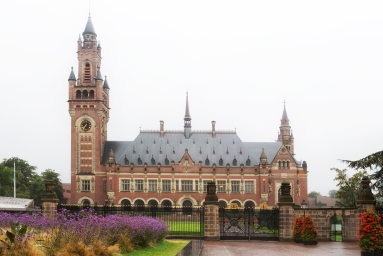
The International Court of Justice
The Hague, Netherlands – August 2, 2016: The International Court of Justice is the primary judicial branch of the United Nations. Seated in the Peace Palace in The Hague, Netherlands.
In October 2016, South Africa followed Burundi in withdrawing from the International Criminal Court (ICC) asserting bias by the United Nation’s Security Council in its case referrals (Duggard, 2013; Strydom, 2015; The East African, 2016). They point out that the United Nations Security Council has referred cases from Sudan and Libya with only black Africans brought before the court (BBC, 2015). South Africa and other African states charge that the ICC has “lost its direction” (Strydom, 2015). Established in 1959, the European Court of Human Rights (ECtHR) is another exemplary supranational court. The United Kingdom’s (UK) Conservative Party pledges to sever ties with the ECtHR (Travis, 2015) as it impinges on British sovereignty (Watt, 2015). The previous Labour Party government was supportive of the ECtHR and continues to support it while in opposition (Hansard, April 26, 2016). During the last half century, there has been a marked increase in the number of supranational courts and the number of acceding states. Having acceded, however, why do states sever ties with supranational courts?

In acceding, states delegate legal decision-making authority to supranational courts (Helfer and Slaughter, 1997).  As the highest court in the judicial system, the final appellate court is the last judicial forum reviewing legal challenges. A central issue for all states, therefore, is the organization of the judiciary and its role in furthering “peace, order and good government” (POGG) as a feature of constitutional rule (Yusuf, 2014).  The final court lends legitimacy to the policies of the governing coalition, which Dahl (1957) describes as the congressional “lawmaking majority” (284). This legitimizing role makes the judiciary an important participant in the national decision-making process (Dahl, 1957) as governing coalitions pursue their visions of POGG. It is itself, therefore, a “national policy maker” (Dahl, 1957). Shapiro (1964) refers to this notion as “political jurisprudence” (16). As challenges to policies percolate up the judicial hierarchy, legitimization of those policies by the judiciary is an important issue (Dahl, 1957). Reliance upon a supranational court as the final appellate court is seemly incompatible with the modern notion of sovereignty (Swinfen, 1987). I suggest, therefore, that the governing coalitions will seek to remove the supranational court if it perceives a disconnection with the court. This perception is influenced by changes in the political environment that make the state more sensitive to a court over which it has no direct control. If the governing coalition perceives a disconnection with the court, the remedy is to replace it with a national court. I suggest that states sever ties when they perceive the court as incompatible with the policies goals of the governing coalition. This potential juncture is a function of a change in the political environment that increases the disconnection between the governing coalition and the supranational court.  At that juncture, it is more likely that the governing coalition will abandon the court. The importance of the political will to effect change was summarized by the former President of the New Zealand Court of Appeal, Sir Thaddeus McCarthy. He stated in 1976 that he had no doubt that the questions surrounding severing ties with the JCPC “are ultimately political questions” (Richardson, 1997).


International Criminal Court
The Hague, Netherlands – July 5, 2016: The International Criminal Court forecourt, entrance and sign at the new 2016 opened ICC building.
I assert that the political environment can be captured in three categories – drastic change, subtle change, and no change. I define the categories as follows: (1) no change – the state does not experience any change in the political environment when a new governing coalition comes to power with a commitment to the constitution and the continued good governance of the state. This does not preclude law reform, but does not fundamentally change the relationship between the state and its citizens. While there may be a new governing coalition after an election cycle, the basic tenets of a free political environment continue. The new coalition basically pursues the same broad policies but pledges to do a better job; (2) subtle change – the election of a governing coalition with a new vision that underpins new domestic and international policies (Elordi, 2000). These are pursued without fundamental systemic changes to the governing institutions or the rights and liberties of the citizens of the state. While this may also involve constitutional changes, the changes do not fundamentally change the governance landscape (Grace, 2015); and (3) drastic change – includes the promulgation and adoption of a new constitution that fundamentally changes the governing institutions, as well as the rights and liberties of the citizens of the state. In other words, these changes generally alter the relationship between the citizens and the state, or they expand or reduce the range of fundamental constitutional rights (Grace, 2015; Thoburn v Suderland City Council, 2003). Though the process may differ, drastic and subtle changes increases the likelihood that ties with the supranational court will be severed but no change maintains the status quo.

There is evidence that supranational courts will continue emerge in the world community (Specht, 2015). As supranational courts such as the ICC, the ECtHR, the International Court of Justice, the Caribbean Court of Justice, the Inter-American Court of Human Rights and the African Court on Human and People’s Rights continue to adjudicate and other courts emerge around the proliferation of international law, understanding the dynamic relationship with states is crucial. Ultimately, ties with supranational courts depends much less on the performance of the court. It is the governing coalition’s emergent political will in a changed political environment that drives the relationship with the court. The future of supranational courts, therefore, depends on the domestic political environment that influences governing coalition commitment to development and vibrancy of supranational courts.

About the author: Harold Young is an Assistant Professor at Austin Peay State University in Clarksville, Tennessee. His research area is Public Law and examines an American and comparative perspective on judicial institutional changes and decision making. In his previous lives, he was a social worker, a health communications project manager and an attorney-at-law. He can be reached via email at youngh@apsu.edu.

Friday, October 28, 2016

The World Just Made A Major Shift Toward Renewable Energy
“We are witnessing a transformation of global power.”
 10/26/2016 06:00 am ET
·          

Nick Visser Reporter, The Huffington Post

   FABIAN BIMMER / REUTERS

More than half of all energy generation capacity added in 2015 came from renewable sources.
The world installed more new renewable energy last year than coal, as countries attempt to shift away from fossil fuels and take advantage of massive cost reductions in wind and solar technology.
More than half of all energy generation capacity added in 2015 came from renewable sources, as the world installed more than half a million solar panels a day and two wind turbines every hour, the International Energy Agency announced Tuesday.
“We are witnessing a transformation of global power markets led by renewables and, as is the case with other fields, the center of gravity for renewable growth is moving to emerging markets,” IEA executive director Fatih Birol said in a statement.
Those statistics only reflect the total amount now able to be produced, not the energy that was actually generated.
The agency said renewables would be the fastest-growing source of electricity production over the next five years and would “rapidly close the gap with coal.” More than 65 percent of this capacity will come from development in China, the U.S., the European Union and India ― also the world’s four biggest polluters.
The cost of renewable energy has fallen dramatically in recent years as funding for new technology has skyrocketed. Investment in clean energy capacity beat that of fossil fuels 2 to 1 between 2008 and 2015, according to the United Nations Environment Program.
Leaders in the environmental community praised the statistics. Michael Brune, executive director of the Sierra Club, hailed the move as a “historic milestone,” but he called on leaders to “maintain our focus to keep up the momentum” behind the clean energy transition.
“The international community has reached a turning point as we hit the accelerator on the transition to a clean energy economy,” Brune said in a statement. “This news doesn’t just mean the world installed more renewable energy than dirty coal ― it means cleaner air, new jobs, and a more stable climate.”
While the IEA did raise its estimate for the amount of renewable energy produced by 2021, the agency also warned of barriers to entry in developing countries and renewed calls for “stronger policy efforts” in the heat and transportation sectors.